
What We’re Reading
(Click any name below to go to their LinkedIn page.)
Trey Wood
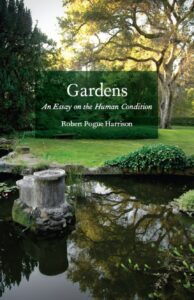
Gardens: An Essay on the Human Condition
By Robert Harrison
I discovered the ever-fascinating Robert Harrison on his long-running podcast Entitled Opinions (about Life & Literature). During his 20+ years of broadcasts from Stanford University, Harrison has covered almost every imaginable topic. I recently decided to take a look at his bibliography in hopes that I could find a book of interest. Surprise! I found many. However, I started with his 2008 book Gardens: An Essay on the Human Condition. I expected to read an analysis of the world’s varying garden styles from Japanese countryside to English manor house. But I thought wrong – and, yet, I chose right. This is a beautiful and graceful reflection on what makes us all so wonderfully and painfully human.
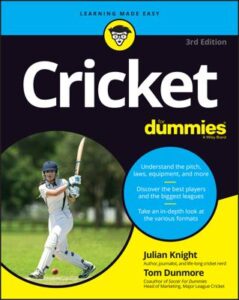
By Julian Knight & Tom Dunmore
For a very long time, I’ve tried to understand all the rules and strategies behind one of the world’s most popular sports – cricket – by merely watching the occasional match. And, every time I think I’ve got it down, something new occurs on the field. So, I’ve returned to the basics with the official first-step guide from the wildly successful “Dummies” series. I wish I had grabbed an earlier version years ago because Knight and Dunmore’s easily accessible chapters are a terrific, if belated, introduction. I highly recommend it for the Cricket curious.
Allison Artnak
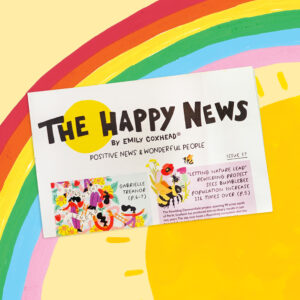
By Emily Coxhead
I am anxiously awaiting my first issue of The Happy News, a quarterly full-color newspaper (launched 2015) that is 32 pages of good news and people around the world. This all started with a young graphic designer and her desire to focus on the positive things in the world. Each issue is theme based and includes features, poems, showbiz, food and more.
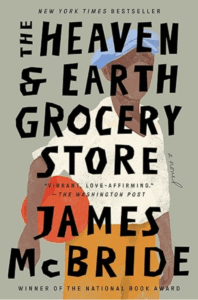
By James McBride
A vibrant murder mystery in the early ’70s Pennsylvania that touches on race, community and faith in humanity.
Michael Garcia
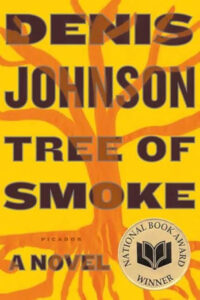
By Denis Johnson
Denis Johnson’s Tree of Smoke is a messy Vietnam War novel that doesn’t really care if you’re keeping up — which seems to be the point. It follows CIA operative Skip Sands and his possibly insane uncle “the Colonel” running secret psyops, and you’re often as disoriented and confused as the characters themselves. Johnson’s writing has a dreamlike quality where he makes horrific things feel hazy and surreal, then suddenly hits you with moments of brutal clarity. It’s not a neat story with heroes and villains — it’s about the human wreckage and the lies people tell themselves to make terrible actions feel meaningful. Did I love this book? No. Am I glad I read it? I think so?
Jennifer Needham
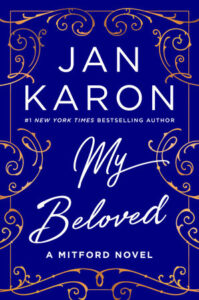
By Jan Karon
For Christmas, two different people gave me the latest novel in the Mitford series by Jan Karon. So, I’ve gotten it into my head to reread the first 14 before I start my new book. It’s been at least 25 years since I read the first book in the series, At Home in Mitford. If you’re not familiar, the series features stories of an Episcopal priest and the villagers in a small, North Carolina mountain town. My best comparison is that it’s like an elevated Hallmark movie in novel form — definitely a comfort read. I just finished book five and now I’m onto book six and hoping to read my Christmas novel in a few weeks time.
Glen Gonzalez
By Rick Rubin
The gray-maned, often barefooted Rubin once told Anderson Cooper, “I have no technical ability, and I know nothing about music.” This claim is only slightly contradicted by his rudimentary guitar work on No Sleep Till Brooklyn. Still, it’s a puzzling admission from a music producer who helped create iconic albums for a wide-range of acts, including The Beastie Boys, Slayer, Metallica, Black Sabbath, Audiosalve, Adele, Lady Gaga, Johnny Cash and many more. So, when I discovered his book The Creative Act, I was intrigued. The short chapters and Rubin’s unadorned style make his musings and meditations an easy read. If his creative output didn’t speak for itself, the book might easily be written off as new age mumbo jumbo oozing out of an overconfident hippie lost in the wrong decade. But, I took each chapter as a cue to reflect on the source of creativity and as encouragement not to let self-doubt, fads and criticism stand in the way of my creative output. The book is a good read for anyone who considers themselves creative and for anyone who might be too bashful to embrace their creative side.
Scott Walters
By Joseph Roth
On Tyranny Graphic Edition: Twenty Lessons from the Twentieth Century
By Timothy Snyder, Nora Krug (Illustrator)
Don Sanford
Blood and Treasure: Daniel Boone and the fight for America’s first frontier
By Bob Drury and Tom Clavin
I live within a mile of the Daniel Boone national historic site in the small, somewhat isolated town of Defiance, Missouri – just a stone’s throw from the mighty Missouri river which cuts across the sprawling American West. So naturally I was curious to learn more about the great frontiersman Boone and his rough and tumble life. And oh, what a read this was. While it is an historical documentation of events, mostly chronicling his expansion through Kentucky in the 1760s and 70s, authors Bob Drury and Tom Clavin bring the stories to life with wonderful text and edge of the seat suspense and intrigue. What struck me most about this time in the history of our country was the intense and very graphic violence between the settlers and the native Americans. It truly was a brutal time in the evolution of the new nation, and it is a small miracle that Boone survived so many episodes and attacks. If you are looking for a glimpse into what the frontier life was really like, you will be surprised, sometimes disappointed (in the treatment of Indians), but always fascinated with this compilation. Blood and Treasure is a snapshot of a time that will stay with you, and leave you in wonder, long after you have turned the final page.
By Min Jin Lee
Pachinko is a historical fiction novel that covers the life of a Korean family that has immigrated to Japan. We see the evolution of a family from very poor to moderate success beginning in 1910 and running through 1989. The book is wonderfully written with deep character development and real emotion. Perhaps one of the more surprising themes for me that emerged from this read was the incredible discrimination of Koreans by Japanese during World War I. I had no idea that prejudice existed between and among Asian countries. I foolishly assumed they all just got along. The book also blurs the lines between right and wrong / good and evil. Bad people aren’t always so bad and good people aren’t always that good. By the way, Pachinko is a very popular gambling game played in parlors in Japan. Some consider it low class to run a Pachinko parlor; but it does pay the bills. Bottom line, this is a highly entertaining, eye opening and thought-provoking novel. Hard to find books that hit all those high notes.
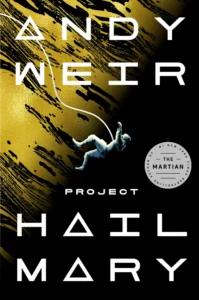
By Andy Weir
This is a fun story about an amnesic astronaut on a solo mission to save Earth. As the story evolves, he slowly regains his memory … and purpose. The book does a marvelous job of flashback, to explain why this person is alone spiraling across space, on a save-the-Earth mission; then jolting us back into the present time to see how he actually performs. Along the way the astronaut encounters an alien form that he interacts with to successfully complete his mission. Written by Andy Weir (he penned The Martian as well) it brings to life what our imagination struggles to form. The alien is a real living thing that communicates and connects with a human. This is all we really want from our aliens, isn’t it? Wild stuff to ponder. This book is a fast read and real page turner. A movie based on the book and starring Ryan Gosling is slated to be released this year. Can’t wait to compare the flick to the real deal.
Karen Sherman
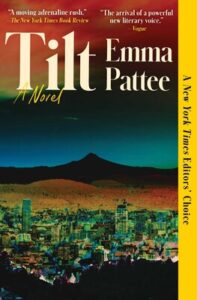
by Emma Pattee
Tilt is one of those books that kind of sneaks up on you. Not because of a big plot, but because of how closely it captures that feeling when everything is just… off. The story takes place over a single day during a massive earthquake in Seattle and follows a pregnant woman as things slowly spiral. It’s full of small, very human moments—fear, uncertainty, second-guessing, sitting with your own thoughts when the world feels paused. It’s not really about survival in a dramatic sense. It’s more about vulnerability and how we recalibrate when the things we thought were solid suddenly aren’t. This isn’t a book I’d run around telling everyone they have to read, but if you stumble on it, stick with it. You might get hooked. It stayed with me longer than I expected.
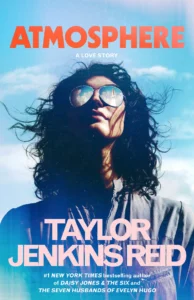
By Taylor Jenkins Reid
This one grabbed me right away. Yes, it’s set in the 1980s space program and follows astronauts and NASA, but at its core it’s really about people. The story centers on Joan Goodwin, a physicist chosen for astronaut training, and looks at what it costs to chase something extraordinary while still trying to hold onto relationships and a sense of self. What I loved most was how space is treated not just as a place, but as an emotional landscape—distance, longing, ambition, love. The characters felt very real, and I got attached quickly. It’s emotional without being overwhelming, cinematic but still intimate, and the kind of book that makes you feel like you spent time well.
Very different reads, but I thought I’d share two that are a little different than my normal stuff.
Norine Cannon
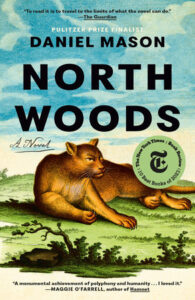
by Daniel Mason
This book traces a single house in the woods of Massachusetts across 300 years of American history, told through the lives of those who inhabit it across the centuries. It has a unique structure with interlinked stories that follow the seasons and are divided into the twelve months of the year.
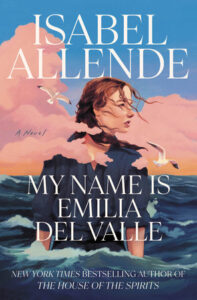
by Isabel Allende
A young woman in late 19th century San Francisco defies societal expectations to become a writer. When she travels to Chile to explore her roots, she finds herself documenting the country’s civil war as a correspondent. She’s a compelling heroine, and Allende weaves in fascinating historical details.
Gina Jackson
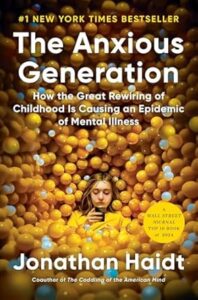
by Jonathan Haidt
As a mother of a soon-to-be teenager, I worry about technology’s impact on my daughter’s wellbeing. The pandemic shifted us from outdoor playdates to digital learning and on-screen socializing—a pattern that continues today.
Our household battles over screen time limits, phone-free zones, and app restrictions persist despite coordinating in-person friendships. Talking with other parents often leaves me feeling alone in my approach. Am I over-parenting or under-parenting? Technology isn’t disappearing, so where’s the balance? Growing up in the 80s, I lack experience navigating this added layer of complexity.
The Anxious Generation is essential reading for parents. While Haidt presents startling research about where we’re headed, he offers hope and a roadmap forward. He argues that smartphones and diminished play have “rewired” childhood, increasing mental illness. Children need early adversity and challenges—typically learned through risky play, testing limits, and coping with failure—to handle difficulties in adulthood.
Reading this book validates my restrictions and guides my ongoing adjustments. I’m teaching my daughter to make better choices and find balance. Hopefully she’ll appreciate these values as an adult. For now, I’ll endure the eye rolls followed by a “bruh.”
Gretchen Vaught
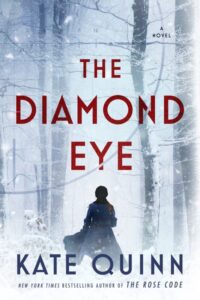
by Kate Quinn [I’ve read everything available by Kate Quinn.]
Based on a true story, The Diamond Eye is a haunting novel of heroism born of desperation, of a mother who became a soldier, of a woman who found her place in the world and changed the course of history forever.
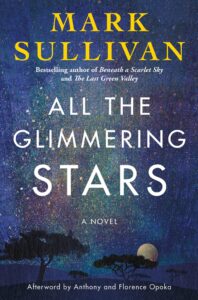
by Mark Sullivan [I’ve read everything available by Mark Sullivan.]
This is the story of a real couple who have lived an unbelievable life of devastation and miraculous deliverance while under the control of a homicidal cult leader. Anthony Opoka and Florence Okori came of age in Uganda in the 1990s—while I was in college. Outstanding students, they believe in being good humans before they are kidnapped and forced into the fanatical Lord’s Resistance Army.
Amy Crowell
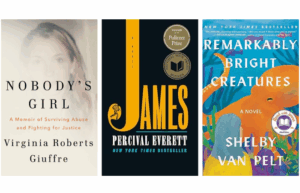
My recent reading included James, a clever retelling of Huckleberry Finn from Jim’s point of view, followed by Remarkably Bright Creatures, which traces an unlikely friendship between a grieving widow and an octopus at an aquarium as their stories quietly intertwine. From there, my reading took a more intense turn. Nobody’s Girl is a candid and powerful memoir by Virginia Giuffre, and A Little Life follows four college friends over four decades in New York City. To say it was emotionally demanding is an understatement, though it is also beautifully written. Feeling a bit bruised after those two, I’m more than ready for something warm and funny — The Guncle is up next.
Rick Cole
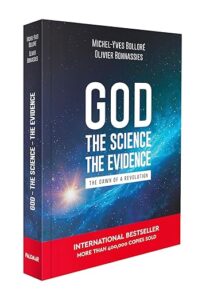
God, the Science, the Evidence
By Michel-Yves Bollore and Olivier Bonnassies
“Trust the science?”
God, the Science, the Evidence argues that modern physics supports the existence of God more than it does strict materialism. Written by scientists and scholars, the book is openly apologetic but anchored in mainstream cosmology—not religious sentiment.
Their argument centers on two pillars. First, the Big Bang. A universe with a definite beginning, the authors contend, points to a cause beyond space and time—not a “God of the gaps,” but a logical conclusion from contemporary science.
Second, fine-tuning. Fundamental constants like gravity and the cosmological constant must fall within impossibly narrow ranges for life to exist. Random chance, the authors argue, can’t account for this precision.
Bollore and Bonnassies deliver a well-structured case that science and theism aren’t enemies—they’re potential allies. It’s a lot of book, deeply sourced and notated. I found the details about the precarious balance of the universe most fascinating.
“Trust the science,” indeed⏤and “Praise the Lord.”
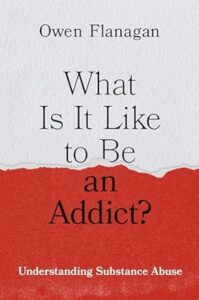
What Is It Like to Be an Addict?
By Owen Flanagan
According to the National Center for Drug Abuse Statistics, over 49 Million Americans suffer from either drug addiction or alcohol use disorder. A majority of American families have been harmed by this epidemic. Including mine.
I’ve found many resources to help me learn how to help my friends and loved ones with addiction. Yet I’ve never read anything as useful as Owen Flanagan’s book, What Is It Like to Be and Addict?
Owen Flanagan is a mind scientist of some renown, holding dual Professor Emeritus positions at Duke in Philosophy and Neurology. He also is an addict. For 20 years, Flanagan abused alcohol and benzos, leading to many hospitalizations, and, eventually, AA and sobriety.
The combination of personal experience, scientific understanding, philosophical nuance and razor-sharp writing ability make Owen Flanagan the best authority on the life of an addict that I’ve encountered. His openness, humility and compassion underpin the entire project. If you need to understand addiction, read this book.